Aloha Food Factory
Eat · Alhambra
Text or call (855) 212-4853
Koli from TravelHere replies by text. Msg & data rates may apply. Reply STOP to opt out, HELP for help.
Bigger day out · Los Angeles
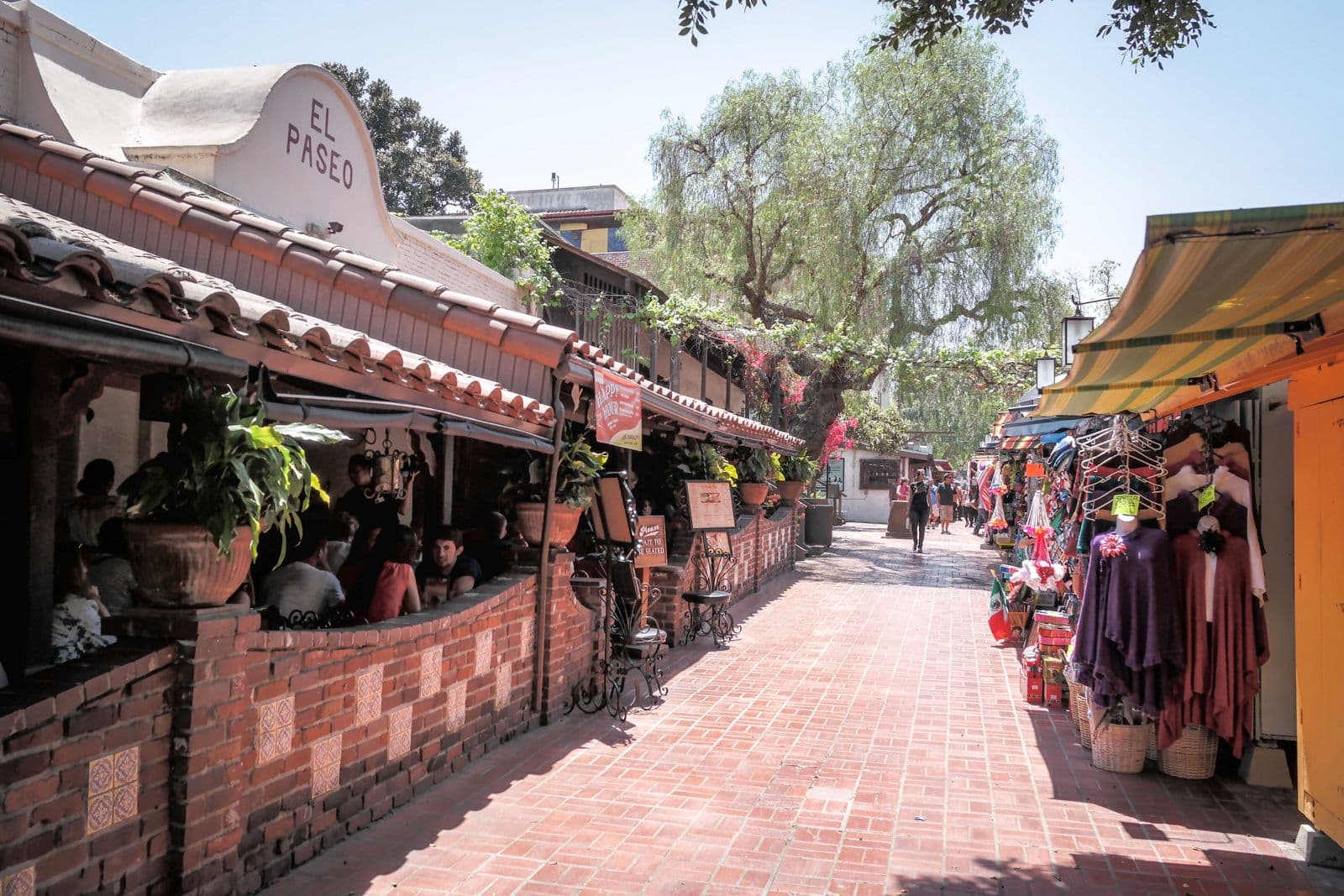
Mexican marketplace street in El Pueblo, the city's founding site.
Olvera Street is a historic lane for walkers only, set in El Pueblo de Los Ángeles, the old heart of Los Angeles.4 It opens off the Plaza de Los Ángeles, which Wikipedia describes as the oldest plaza in California.4 The city calls the surrounding El Pueblo de Los Angeles Historical Monument the birthplace of Los Angeles.1
Inside this historic district you will find museums, exhibits and the Olvera Street marketplace.1 Restaurants, vendors and public establishments crowd both sides of the street.4 Come to shop and eat, then stay to explore the museums, historic sites and architecture.1
Los Angeles was founded in 1781, and its plaza remained the center of town life from the Spanish and Mexican periods into early American times.4 The street has gone by several names over the years, including Placita Olvera, Calle de los Vignes, Vine Street and Wine Street.4 In 1877, the City Council renamed the little alley called Wine Street as Olvera Street, honoring Agustin Olvera.4
As the town expanded, the original settlement fell into neglect and became a neighborhood for new immigrants, especially Mexicans and Sicilians.4 In the 1920s, Christine Sterling led a public push to restore the Francisco Avila Adobe.4 That effort widened into a plan to remake Olvera Street as a Mexican-style marketplace.4 The street closed to cars in 1929, and the marketplace opened in 1930.4,5
Stroll the marketplace and step into the historic buildings clustered around the old plaza.5
Avila Adobe
Sepulveda House
La Placita Church
Established in 1814, the Our Lady the Queen of the Angels parish church saw its building finished and formally dedicated in 1822.5
Old Plaza Firehouse
The Old Plaza Firehouse was built in 1884 and opened as a firefighting museum in 1960.5
The Plaza
Laid out in the 1820s, the plaza served as the town's hub for trade and social life, and it still hosts many festivals and celebrations.5
Museums
Four buildings in the district have been restored and now operate as museums.5
Tours
A volunteer group called Las Angelitas del Pueblo leads tours of the district.5
Centered on the old plaza, this district was the city's heart under Spanish, Mexican and United States rule through most of the 19th century.5 The state named the 44-acre area a historic monument in 1953, and it joined the National Register of Historic Places in 1972.5 Across from the Old Plaza, a plaque marks the founding of the city.5 Wikipedia notes that the district holds the city's oldest historic structures, gathered around the old plaza.5
The El Pueblo Historical Monument is at 125 Paseo de la Plaza, Los Angeles, CA 90012.1 Olvera Street lies in the northeast of Downtown Los Angeles, between Main and Alameda streets, and runs north from Los Angeles Plaza to Cesar Chavez Avenue, west of Union Station.4
Written by TravelHere from the sources below (draft deepseek/deepseek-v4.1-flash, polish z-ai/glm-5.3, final anthropic/claude-opus-5.5).
Eat · Alhambra